

Frankenstein (2025) Review
A beautiful film telling a blunted story

I have been objectively rude a handful of times in my life. The first I remember was in Advanced Placement Literature class, 2008 or 09, when we were discussing Mary Shelley’s Frankenstein.
I thought I was smarter than the teacher (and, heck, probably the entire class), and I decided the common reading of this classic novel was insufficient. When the question was inevitably asked—”who is the monster in Frankenstein”—a poor football player answered “Dr. Frankenstein,” to which I rolled my eyes and huffed.
Rightfully called out by the teacher, I clarified that I believed both Dr. Frankenstein and his creature were monsters. Of course, Frankenstein is monstrous for creating life and wantonly discarding it. But his creature is self-aware and becomes educated to the same morality as any man: he has no excuse to murder innocents in acts of misplaced revenge against his creator.
I don’t remember how that discussion ended, but the teenager in me likes to believe I left the class stunned with my brilliance, and my superiority was never again questioned. (In case you don’t know what my sarcasm sounds like, that was it, and I often think of that football player and hope he can forgive me for using him as my instrument to show off in front of a teacher I didn’t respect. It’s almost like I used another person as a tool to serve my pride, instead of respecting his feelings and opinions as worthy on their own merits. Almost like…Frankenstein!)

Reading Frankenstein
Frankenstein or The Modern Prometheus is many things to many people, but it has mostly been ground down to this single, popular reading: “the man was the monster and the monster was the man.” An interpretation with all the heat and edge of a three-day old McDonald’s French fry.
While valid, this reading only touches on one of Shelley’s many themes. The brilliance of the book lies in how seamlessly it weaves together massive, weighty concepts—the sin of pride, the limits of science, the nature of fatherhood, and societal rejection—into a single narrative. The creature’s journey from infant philosopher to bitter murderer is the result of compounding failures, not just one single act of creation. It is this thematic density that makes the reading experience limitless, and it is precisely this complexity that makes the journey into watching the story on screen so often disappointing.
Watching Frankenstein
Guillermo del Toro’s 2025 adaptation attempts to add more flesh to that bone but stumbles under the weight of its own ambition, offering us a beautiful visual cake that is mostly just icing.
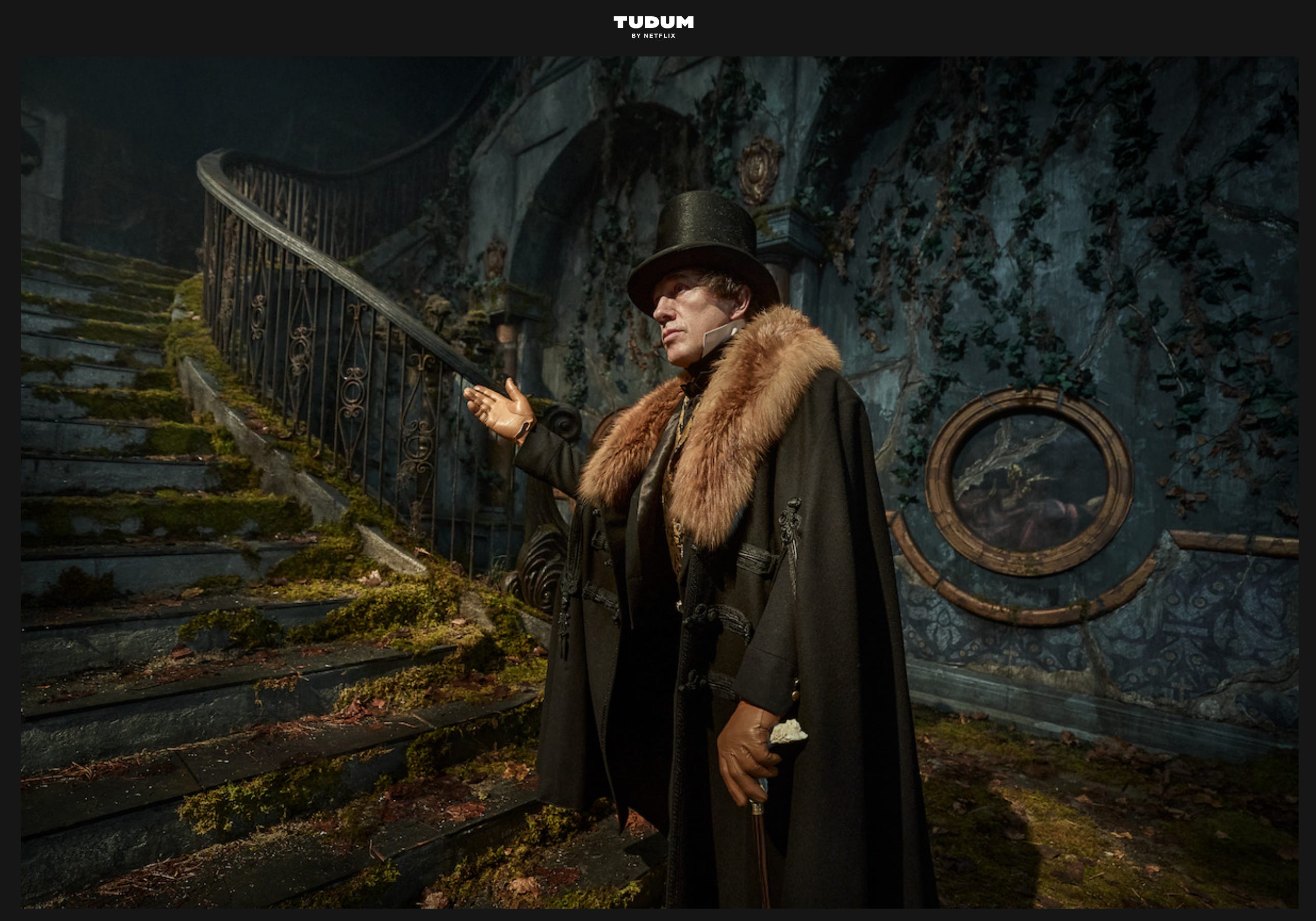
The film’s visual trappings are stunning, to the point of distraction. The costumes and lighting are divine (sometimes literally). And the cinematography and direction are perfect. It’s worth watching for the aesthetics alone.
I loved the film’s focus on the extreme anatomical details. del Toro’s Frankenstein doesn’t just want the best body parts, he wants the best circuitry and vascular system. He takes a knee from one man, a nerve cluster from another, and on and on until he reaches true perfection. If you don’t like gore, this isn’t the movie for you, but the attention to detail is astounding.
The problem is that all this worldly detail is more exciting than the flat story. The mechanics and world design were much more interesting than the characters, so the mind lingers there instead: How do all of these veins line up? How do the muscle sizes match? Are they all the same blood type? These questions come up only when the story isn’t strong enough to hold your attention.
The Flat Performances
I am disappointed that del Toro would make a film that has nothing new to say. I could afford a decent lunch if I got a dollar for every time someone in this movie called Victor a “monster” to his face. That’s the level of writing we’re dealing with for two and a half hours. Maybe it’s Netflix’s fault—there are many think pieces out there covering the dumbing down of modern media, especially in the age of playing on your phone or laptop while watching TV. But whoever is to blame, it’s insulting and boring and, at times, derisible.
Like much of the writing, the main cast is about as sharp as a pool noodle. Except for Jacob Elordi (the creature) and Christoph Waltz (Herr Harlander). As the creature, Elordi shines. I had never seen him before this role, but apparently he got his start in a few Netflix young-adult kissy movies, so I am surprised by the depth of his performance. Through heavy prosthetics and make-up, Elordi’s Creature is emotive, moving, and deeply sympathetic.
Unfortunately, you can’t hide the fact that Elordi is a handsome young man, so it becomes a tad unbelievable that people would fear him without seeing his many scars first. It’s more like they’re afraid of anyone over 6’ tall than of his deformities.
Meanwhile, Mia Goth as Elizabeth has the charisma of a dead fish. (As does her fiancé William, who is less worthy of mention than his six-year-old book counterpart.) I don’t think the actress was given much to work with, as her character seemed to be a woman-shaped box, where you could insert a Marry Shelley stand-in or Feminist Talking Point as necessary.
Oscar Isaac’s Frankenstein (and I’d argue, his entire career) depends on his scene partner to bring out his best. With Elordi and Waltz, Frankenstein is bombastic, temperamental, and effusive. But the rest of the cast can’t get much out of him, and the movie drags whenever Elordi and Waltz aren’t on screen.
There is some great dialogue hiding amid the blunt story. The creature’s line,” Why do you only listen when I hurt you,” haunts me, especially within the father-son lens. But those stellar moments fail to make the movie greater than its parts.
Writing Frankenstein
Frankenstein (2025) is disappointing both in light of what Mary Shelley did write and what del Toro could write. Both are masters of their craft, and this film does not display either of them well.
The potential themes in Frankenstein seem limitless. You could follow a family angle (fatherhood, motherhood, legacy). You can go cultural (Elizabeth’s lack of autonomy, men’s failure to protect and provide). You could even gender-swap any or all characters in this story, and very little would have to change, but the themes would take on a drastically different meaning.
There is so much to do in Frankenstein. And del Toro did almost none of it because he chose to do all of it. He chose the family route, especially fatherhood. Not bad. But he also kept the classic sin of pride and monstrosity themes, and then threw in Prometheus, Adam and Eve, and some feminism for spice.
The problem is you don’t have to harp on themes already woven into the fabric of the story. They’re inextricably linked with the narrative because Shelley was a good writer. I wish del Toro had chosen to let those well-trodden themes exist on their own and narrowed in on the stuff he found interesting, like the fatherhood theme. Frankenstein: an exploration of a son’s attempt to live up to his father’s expectations while also clinging to his mother’s warmth: that’s a classic theme right there.
Instead, he wanted everything and the kitchen sink, which made the end of the movie almost distasteful. The creature forgives Frankenstein because… he asked him to? Literally nothing had changed between them, except that Frankenstein had heard the creature’s story. But nothing in that story contradicted Frankenstein’s biases. He was still a vain man who blamed others for his own failings. Earlier, he apologized to Elizabeth using almost the exact same words, and she called him a liar and slapped him in the face! What makes him a liar then and honest now?
I don’t mind the creature forgiving him, that’s a perfectly solid ending to a fatherhood exploration, but you have to earn it. The moment failed because del Toro had so much fun watching Frankenstein create and reject his creature that he forgot he had the whole back half of the story to write—the hard, messy, unglamorous work of change and accountability.
The Magic in Frankenstein
Sadly, this film will join the pile of others that attempted to do justice to a book that will outlive them all. It is absolutely gorgeous. A really wonderful visual cake to sink your teeth into. But it’s mostly just icing. Without the proven recipe of Shelley’s original, del Toro’s version would be little more than cotton candy. The magic of media is not in the visual splendor; it’s in the depth of the text that invites us back to read, watch, and write our own meanings, year after year.
Thanks for reading! If you like what I’m doing, subscribe to see more reviews like this.
Not ready to commit to a subscription? You can buy me a coffee!

Karin Manley
Founder & Editor
Read, Watch, Write: Unveiling Media’s Magic
ReadWatchWrite.substack.com
This post was created with the assistance of an AI, to help edit the content.
I’m glad you brought up how abrupt the redemption arc was. The two hated each other the whole time, then Frankenstein apologizes, and the creature is like “oh, okay, cool” and that’s basically it. I didn’t feel an emotional payoff in that moment that I would have liked to